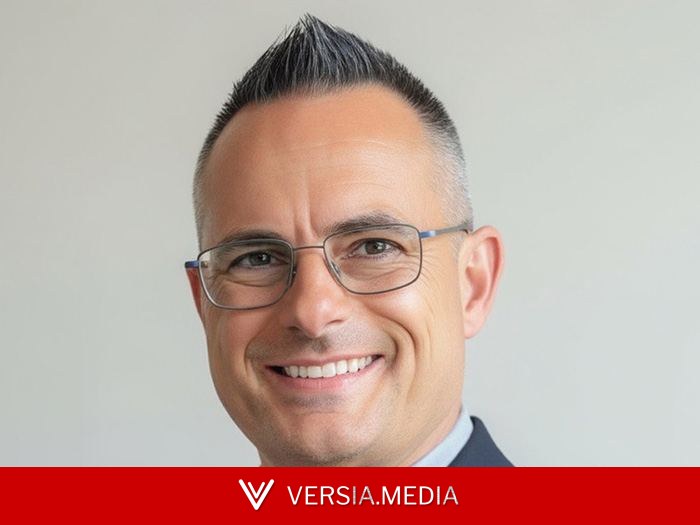
Loren Nickel, director of business risk and insurance, Alphabet
Few risk categories have emerged in recent years with the complexity and regulatory scrutiny of autonomous vehicles. As driverless technology moves from research labs onto public streets, the organizations developing it face a fundamental question: how do you transfer risk for something the insurance market has never underwritten before?
That question landed squarely on the desk of Loren Nickel, Director of Business Risk and Insurance at Alphabet Inc. As one of the world’s largest and most diversified organizations, Alphabet already navigated a risk landscape stretching from conventional workers’ compensation exposures to intricate digital risks affecting the broader U.S. economy. But insuring autonomous vehicles through Waymo represented uncharted territory.
A Risk Profile Without Precedent
The challenge Nickel faced was not simply finding capacity in the insurance marketplace. It was helping that marketplace understand a technology it had never evaluated before, while simultaneously building a program that satisfied regulators, protected the company, and remained economically viable.
Autonomous vehicles sit at the intersection of automotive liability, product liability, software risk, and emerging regulatory regimes that vary city by city and state by state. For underwriters accustomed to actuarial data spanning decades of human-driven vehicles, the questions were significant. How do you price risk for a fleet that operates without drivers? How do you account for software updates that can change vehicle behavior overnight? How do you build a program flexible enough to scale as Waymo expanded into new cities?
Compounding the challenge, Alphabet’s overall risk profile was already very broad. Any solution for Waymo needed to fit within a larger architecture that balanced risk retention against risk transfer across the entire organization. A standalone approach would not work. Nickel needed a program that achieved cost efficiency at the enterprise level while providing robust, defensible coverage for one of the most scrutinized technologies of the decade.
Building the Bridge Between Technology and Underwriting
Rather than treating the insurance placement as a transactional exercise, Nickel approached it as an education and partnership challenge. He recognized that underwriters could not price what they did not understand, and that the only path forward was direct engagement between Alphabet’s technical teams and the insurance market’s senior decision-makers.
Nickel fostered a collaborative ecosystem that brought together expert brokers and insurance partners, including Starr. He ensured that Starr’s underwriters and senior leadership, including Chairman Maurice R. Greenberg, received firsthand insight into the Waymo platform through direct demonstrations and transparent dialogue. Underwriters saw the technology in action. They asked questions and received candid answers. They got the kind of access that turns a speculative risk into an evaluable one.
That transparency was the foundation for everything that followed. &